FGV 2026 (Vestibular 2026/2 · Administração · 1ª fase) · questão 44
Questão 44 FGV 2026 · Vestibular 2026/2 · Administração · 1ª fase: Vocabulário e expressões
Texto para responder às próximas duas questões
TSAR ALEXANDER II
By Mark Seaman
(Historical Note: Serfdom [servidão] was a feudal system where laborers known as serfs [servos] were legally bound to work a lord's estate, trading their freedom of movement and labor for protection and a small plot of land. They were not personal property like slaves, but they could not leave the land, often passing this involuntary, hereditary status to their children.)
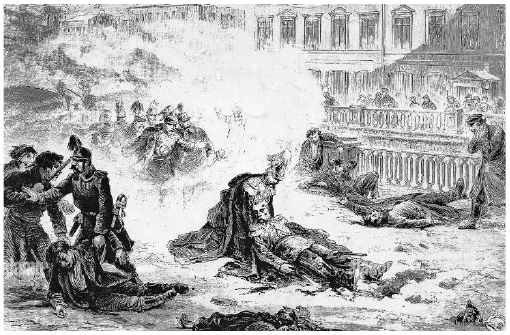
Though he was known as “Alexander the Liberator” for having abolished serfdom in the Russian Empire in 1861, there were so many attempts to assassinate Tsar Alexander II that he developed a reputation as a one-man disaster area. To be anywhere in his vicinity was felt to be so hazardous [perigosa] that the citizens of St. Petersburg would not buy tickets for the opera unless they were given an assurance that the Tsar would not be attending the performance. Finally, in March 1881, the assassins succeeded. A bomb was thrown at the Imperial carriage and exploded, injuring a child and a Cossack guardsman but leaving the Tsar unharmed. Alexander ordered his carriage to stop and went to comfort the wounded man, but then a second bomb was flung. This time twenty spectators were killed and the Tsar was almost blown in half. He died about an hour later.
Adapted from the book The Rest is History.
In sentence 2, the phrase “…he developed a reputation as a one-man disaster area” most likely refers to which of the following?
- AJust the appearance of the Tsar at any public space could make people there fear that terrible violence might soon occur.
- BOn one occasion, two different revolutionary factions tried to kill the Tsar on the same day.
- CBy abolishing serfdom, the Tsar ruined the Russian economy.
- DThe presence of the Tsar and his family at an opera could bankrupt an opera house.
- EThe Tsar simply could not believe that he was so unpopular.