Unesp 2023 (Vestibular 2023 · 1ª fase) · questão 25
Questão 25 Unesp 2023 · Vestibular 2023 · 1ª fase: Interpretação de texto
Examine o gráfico e o mapa e leia o texto para responder às questões de 21 a 26.
In March 2022, parts of Antarctica have been 40 °C warmer than their March average
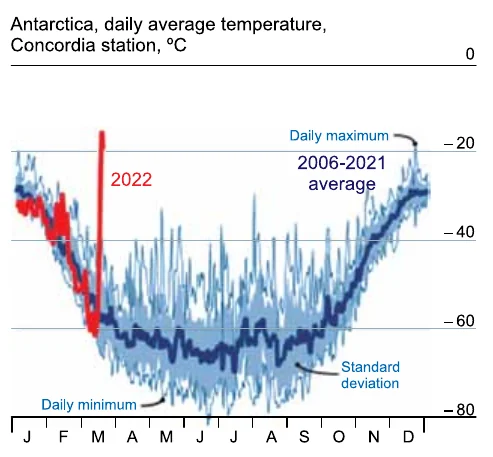
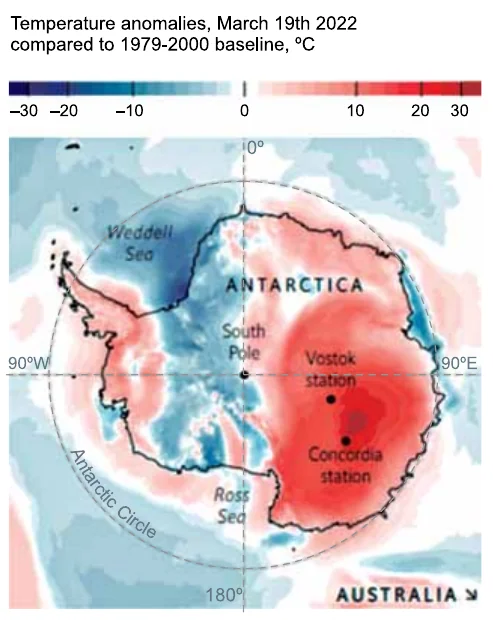
The Concordia research station is one of the most inhospitable places on Earth. At 3,000 m above sea level on the Antarctic Plateau, the temperature rarely rises above -25 °C even in the summer. In midwinter it can fall to around -80 °C. The air is painfully dry, and fingers, toes and noses can freeze in minutes. The dozen or so crew, mainly French and Italian, who live and work in the station would normally venture out only for essential work. But Concordia has recently experienced a heatwave. On March 18th the temperature reached a high of -11.8 °C — more than 40 °C warmer than the average for this time of year.
Similarly freakish weather was recorded across eastern Antarctica. Temperatures at the Russian-run Vostok research station rose to -17.7 °C, more than 15 °C above the previous record for March, set in 1967. Across the continent temperatures were 4.5 °C higher than usual (though in recent days they have returned to a normal range).
Meteorologists have attributed the latest heatwave to an atmospheric “river” of warm, damp air blowing towards Antarctica from the Southern Ocean near Australia. It is difficult to know whether climate change is to blame for one-off weather events. But over the past 65 years or so there has been an increase in the number of “high temperature” days at Antarctic stations.
Most regions of Antarctica have been spared global warming. In the late 20th century, a large hole opened up in the ozone layer above the South Pole. This has a regional cooling effect, which has offset much of the heating caused by rising concentrations of greenhouse gases in the atmosphere. Temperatures on the continent rarely climb above freezing, which preserves its vast ice sheets (although rising sea temperatures do threaten some areas). Even in the recent surge, temperatures stayed well below zero.
(www.economist.com, 24.03.2022. Adaptado.)
According to the third paragraph, meteorologists associate the high temperature wave in Antarctica with
- Aa cycle of temperature peaks that happen every 65 years.
- Bthe melting of the snow, which creates temporary rivers across the continent.
- Can unusually hot summer in Australia.
- Dthe inflow of warm and damp winds coming from the ocean.
- Ethe abrupt weather changes in the Southern Ocean.