Unesp 2019 (Vestibular 2019 · 2ª fase) · questão 36
Questão 36 Unesp 2019 · Vestibular 2019 · 2ª fase: Interpretação de texto
Leia o texto para responder, em português, às questões 33, 34 e 36.
Medieval Monsters: Terrors, Aliens, Wonders
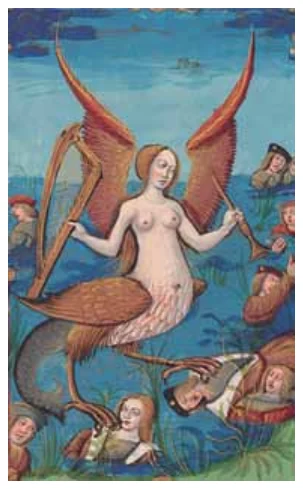
“Siren”, from Abus du monde (The abuses of the world), France, Rouen, ca. 1510. New York, The Morgan Library & Museum.
Monsters captivated the imagination of medieval men and women, just as they continue to fascinate us today. Drawing on the Morgan’s superb collection of illuminated manuscripts, this major exhibition, the first of its kind in North America, will explore the complex social role of monsters in the Middle Ages.
Medieval Monsters will lead visitors through three sections based on the ways monsters functioned in medieval societies. “Terrors” explores how monsters enhanced the aura of those in power, be they rulers, knights, or saints. A second section on “Aliens” demonstrates how marginalized groups in European societies – such as Jews, Muslims, women, the poor, and the disabled – were further alienated by being figured as monstrous. The final section, “Wonders”, considers a group of strange beauties and frightful anomalies that populated the medieval world. Whether employed in ornamental, entertaining, or contemplative settings, these fantastic beings were meant to inspire a sense of marvel and awe in their viewers.
Medieval Monsters: Terrors, Aliens, Wonders runs from June 8 to September 23, 2018 at The Morgan Library & Museum.
(www.themorgan.org, s/d. Adaptado.)
Leia o texto para responder, em português, às questões 35 e 36.
Medi-evil: the monstrous middle ages
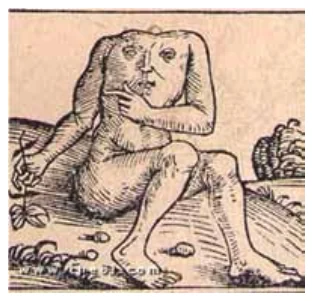
“Blemmyae” from the Nurenberg Chronicle (1493). (www.theoi.com)
Monsters are still everywhere. Godzilla keeps stomping through silver-screen cities, zombies lurch through eight seasons of the TV series “The Walking Dead” and the vampires of “Twilight” nibble necks across thousands of pages of the book series by Stephanie Meyer.
But those looking for some historical context should head to the Morgan Library and Museum in New York to see around 70 works (such as illuminated manuscripts) from the 9th to the 16th century that show how ogres of the imagination have always inspired terror and wonder. In a time when the distant was unknowable, they filled the gaps. Almost always from afar, the monster was a substitute for those perceived to stray from the norm.
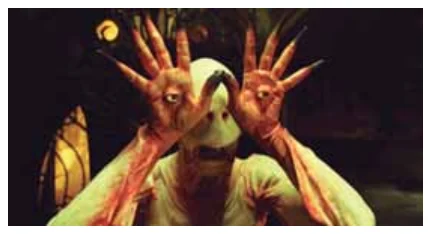
Pale Man in Pan’s Labyrinth. (www.cinematropical.com)
Keep your eyes peeled for a perennial medieval favourite, the Blemmyae: disgusting headless humanoids with their faces transplanted onto their chests. These were quite possibly the inspiration for Guillermo Del Toro’s Pale Man in the film Pan’s Labyrinth (2006) – a horrifying fellow whose eyeballs peer out abjectly from his clawed hands.
(https://espresso.economist.com, 09.06.2018. Adaptado.)
a) De acordo com o texto, a exposição no Morgan Library and Museum abrange qual período histórico? Quantas obras compõem a exposição?
b) No trecho do segundo parágrafo “Almost always from afar, the monster was a substitute for those perceived to stray from the norm”, os trechos sublinhados podem se referir a que grupos sociais identificados no texto anterior “Medieval Monsters: Terrors, Aliens, Wonders”? Justifique sua resposta.